seller guide · manufacturing
Manufacturing in Kenya: How to Check a Supplier Before Your First Wholesale Order
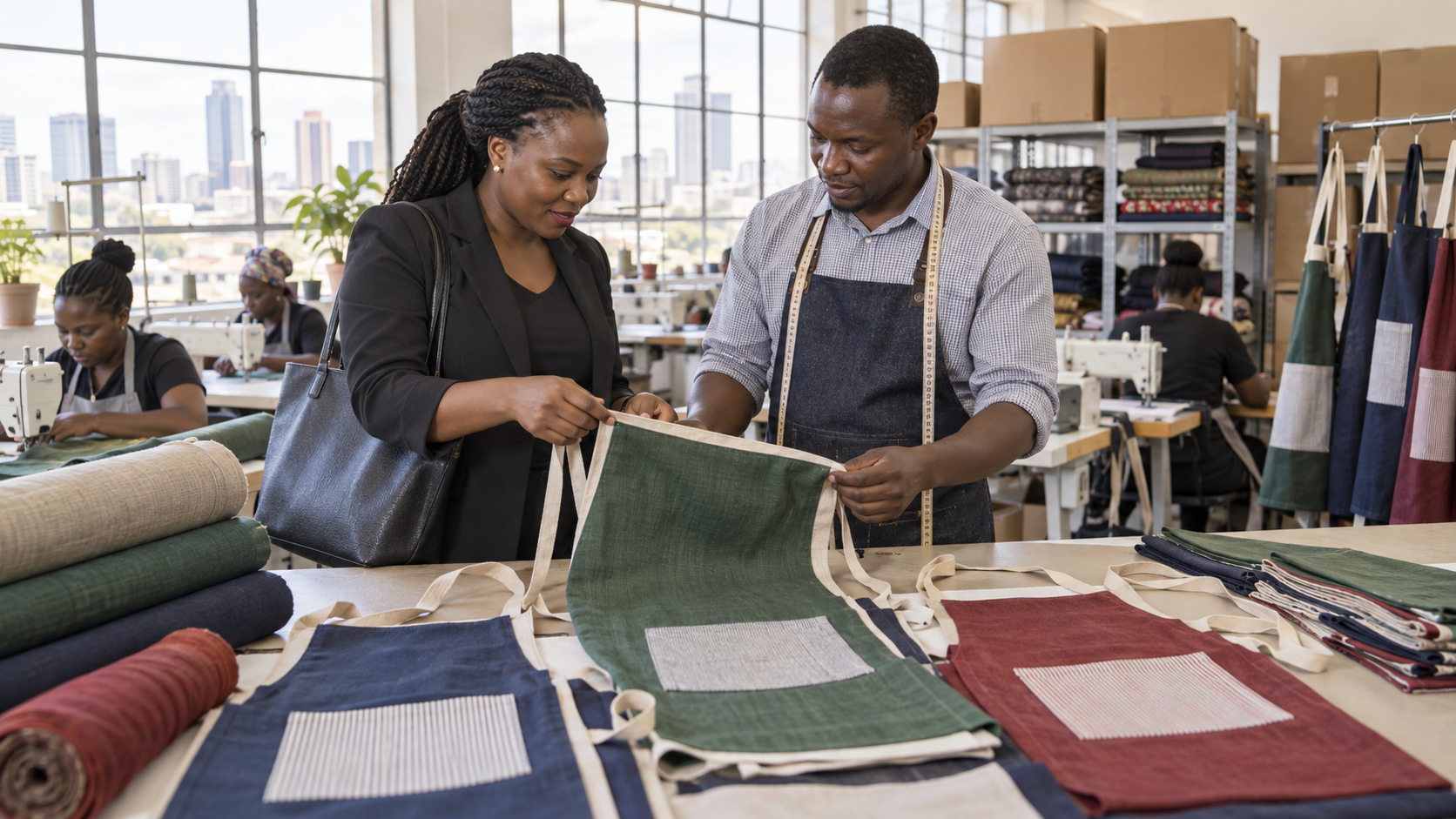
What should you check before paying a Kenyan manufacturer?
You have found a promising local manufacturer. Their photos look good, the salesperson responds quickly, and the quotation seems workable. Before sending a deposit, one practical question matters: how do you confirm that this supplier can deliver the product your business actually needs?
The answer is not one certificate or a friendly factory visit. A useful check connects several things: the business receiving your money, the place making the goods, the product specification, applicable standards, and the terms for handling mistakes. Weakness in any one of these can become your problem after delivery.
This guide is for Kenyan retailers, distributors, hospitality buyers and other businesses placing a first wholesale order. It also helps manufacturers understand what serious customers may ask for. The aim is not to make purchasing difficult. It is to replace assumptions with evidence that both sides can use.
Begin by deciding what could go wrong. A leaking cleaning product needs different checks from an unevenly stitched apron. Goods touching food, products used by children, and items making safety claims may require more specialist attention than simple decorative products.
Keep your checks proportionate to the risk and value of the order. A small trial can answer questions about finish and service, but it cannot replace required regulatory compliance. As founder of Viwanda, my editorial view is simple: buying locally works best when trust is supported by clear records.
“Trust starts the conversation; clear specifications and records protect the order.”— Dr. Chomba Chuma, Founder, Viwanda
Confirm who makes the goods and who receives your payment
Ask for the supplier's legal business name, trading name, physical location and responsible contact person. Establish whether you are dealing directly with the manufacturer, an authorised distributor, or another reseller. Each arrangement can work, but the responsibilities should be clear before you negotiate payment.
Compare these details across the quotation, invoice, business documents and payment instructions. A different trading name is not automatically suspicious. However, unexplained differences deserve a pause. Ask the supplier to explain the relationship in writing rather than relying on a voice note that may be difficult to retrieve later.
If payment instructions change, confirm the change through a contact channel you already trust. Do not depend solely on the same new message that supplied the replacement account. Where a personal payment account is proposed, understand who owns it and how the payment will be formally acknowledged.
You can also ask to visit the production site or arrange a live walkthrough when travel is impractical. Look for the process relevant to your order, not merely a warehouse full of finished products. Some manufacturers outsource certain operations; ask which ones and who remains accountable for quality.
- Record the business name and the person authorised to confirm your order.
- Ask where the specific goods will be manufactured and packed.
- Match payment details to the contracting business, or document the explanation.
- Retain the quotation, payment confirmation and supplier acknowledgement together.
Check the standards for the exact product, not just the company
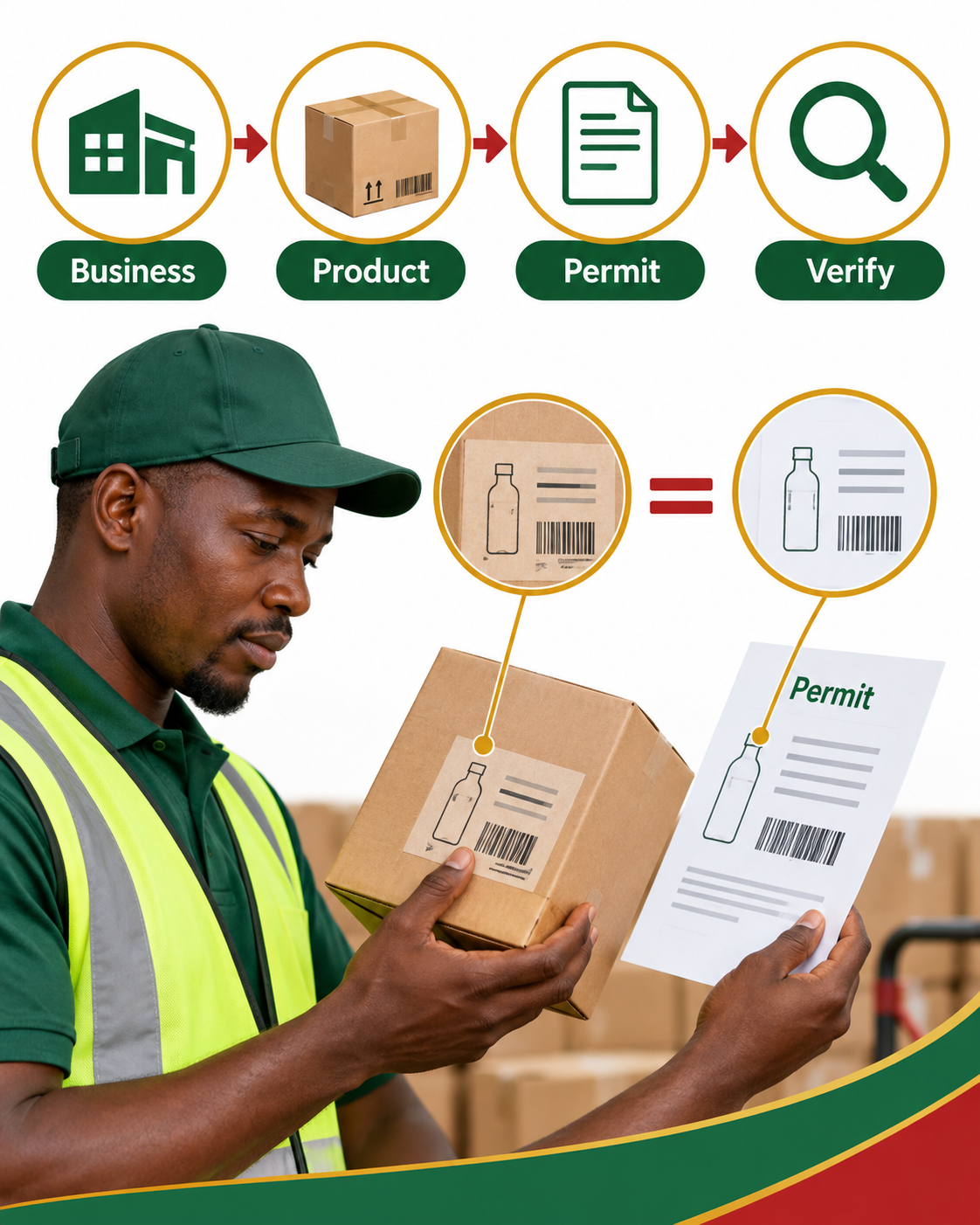
A supplier saying “we are KEBS certified” is a starting point, not a complete answer. Ask what approval or permit applies to the exact product you intend to buy. A company may manufacture several product lines, and evidence for one does not automatically cover all the others.
KEBS operates the Standardization Mark scheme for locally manufactured products. The applicable requirements depend on the product and relevant standard. Consult KEBS directly if you are unsure about coverage, permit status or the correct standard. A logo printed on packaging should not be your only evidence.
Request readable details rather than a cropped screenshot. Check the named manufacturer, product description, brand where relevant, permit information and any stated validity conditions. If the information does not match the goods offered, ask for clarification before payment. Do not try to resolve technical uncertainty by guessing.
Some categories also involve requirements beyond KEBS, including sector specific approvals, labelling rules or licensing. This is especially important where goods affect health, food safety or electrical safety. Ask the relevant authority or a qualified adviser what applies to your intended product and use.
A laboratory report can help answer a defined technical question, but it is not blanket approval for a business. Read what sample was tested, which method was used, when the work was done and what the result actually supports. When verification is unclear, hold the order rather than assuming a document proves more than it says.
Write a specification that two people can interpret the same way
“Good quality,” “strong material” and “standard size” sound useful until a delivery goes wrong. They leave too much room for interpretation. A buying specification describes the features you will check, so the manufacturer knows what to produce and your receiving team knows what to accept.
Start with intended use. An apron for occasional promotional events may need a different fabric and construction from one washed daily in a busy kitchen. Explain the conditions the product will face. Let the manufacturer recommend suitable options, then record the option you actually approve.
Use measurable descriptions where practical. These might include dimensions, material type, pack quantity, colour reference, closure design or required label information. Do not invent technical limits you cannot assess. For specialised performance requirements, get competent advice on an appropriate standard or test.
Include packaging because it affects handling, storage and resale. State whether you need individual packs, labelled cartons or another arrangement. If artwork or branding is involved, approve the final version separately and identify its revision. A correct product inside incorrect packaging can still create costly rework.
- Product identity: model, variant, intended use and approved material.
- Physical features: dimensions, construction, finish and agreed tolerances.
- Packaging: units per pack, carton arrangement and protective materials.
- Labels: required information, approved artwork and batch identification where applicable.
- Acceptance: the checks that determine whether goods meet the agreement.
Use samples to answer specific questions before ordering
A sample is most useful when you know what you are trying to learn. Are you checking stitching, fit, finish, packaging strength or compatibility with equipment? Write down those questions before reviewing it. Otherwise, an attractive presentation can distract you from the feature that matters most.
Ask whether the sample came from normal production, was specially prepared, or represents a prototype. None of these is automatically unacceptable. The distinction matters because a handmade presentation sample may not show what a routine production run will deliver. Discuss how the approved result will be repeated.
Try the sample under realistic conditions where doing so is safe and appropriate. For example, inspect a garment after the agreed care process or check how a storage container fits the intended shelf. Informal trials do not replace required safety testing or specialist laboratory assessment.
Record observations and send a clear approval or correction request. Photographs help with visible features, but they may not capture texture, strength or accurate colour. Where practical, keep an identified reference sample and have the supplier retain a matching one. Link both to the written specification.
Agree whether sample costs, transport and revisions are separate from the production quotation. Also clarify what happens if a sample is rejected. Approval should mean that a defined version passed defined checks, not that you have accepted every future variation or waived your right to report defective goods.
Read the quotation as an agreement about scope
Two quotations can show different totals because they describe different orders. One may include packaging, branding and transport, while another covers only goods collected from the factory. Before deciding which is better, put both suppliers on the same specification and ask them to identify exclusions.
Check the unit of sale carefully. A price per piece is not directly comparable with a price per pack or carton. Confirm the quantity within each unit, the minimum order requirement and whether different variants can be combined. Record how taxes are treated rather than assuming the displayed total includes everything.
Ask what starts the production clock. It may be receipt of the deposit, sample approval, artwork approval or availability of a particular material. Separate the estimated production period from dispatch and transport arrangements. A promised completion date is not necessarily a promise that goods will reach your premises that day.
Payment terms should identify the amount due at each stage and the evidence or event that triggers it. A deposit is not automatically a warning sign, particularly for customised work. The concern is paying without a defined order, a traceable recipient or an agreed way to confirm progress.
- Confirm quantities, variants, unit prices and quotation validity.
- Identify taxes, packaging, branding, handling and transport charges.
- State approval deadlines and the agreed production trigger.
- Link payment stages to clear events and written acknowledgement.
Follow a simple approval sequence for the first order
Supplier checks work better as a sequence than as scattered conversations. If you approve artwork in one chat, change quantities by phone and send payment against an older quotation, disagreements become easier. Use one order reference and collect the final documents in one accessible folder.
Assign someone in your business to approve changes. Even a small shop benefits from knowing who can accept a different material or revised pack size. Tell the supplier that substitutions need written approval. This prevents a helpful production decision from becoming an unexpected receiving problem.
The sequence below can be adapted to the product. Higher risk goods may need independent inspection or specialist testing before release. For a straightforward first purchase, it still provides useful decision points without creating unnecessary paperwork.
- Define the order: write the product specification, quantity, intended use and packaging requirements before requesting a final quotation.
- Verify the supplier: reconcile business identity, production location, payment details and the product compliance evidence relevant to your purchase.
- Approve the sample: record the version reviewed, any corrections and the checks it passed; retain a reference where practical.
- Confirm the agreement: accept the final quotation, payment stages, production trigger, inspection arrangements and remedy process in writing.
- Authorise production: make the agreed payment through the confirmed channel and obtain acknowledgement linked to your order reference.
- Inspect and close: check the delivery against the agreement, document discrepancies promptly and retain the final invoice and resolution records.
Agree how defects and shortages will be handled
The best time to discuss a defective delivery is before production begins. Ask what happens if goods arrive short, damaged, incorrectly labelled or outside the approved specification. A supplier's willingness to discuss a practical remedy tells you something important about how the relationship may work.
Separate manufacturing defects from transport damage and storage problems. Responsibility can depend on the cause and the agreed delivery arrangement. Record who organises transport, who checks goods at collection, and what evidence is needed when damage is discovered. Do not leave these questions to the driver.
Agree a reasonable inspection and reporting process. Some problems are visible on arrival; others become apparent only during use. Your agreement should recognise that distinction where relevant. For a high value or complex order, seek legal advice on acceptance, warranties, liability and dispute resolution.
Possible remedies include replacement, repair, an agreed credit or a refund, depending on the issue and your contract. Do not assume a particular remedy will happen automatically. Ask who pays return transport, how affected goods should be stored and what approval is needed before anything is disposed of.
Keep complaints factual. Identify the order, batch where available, quantity affected, photographs and the specification that was not met. Avoid mixing a genuine defect with a later change in preference. Clear evidence gives a responsible manufacturer a fair chance to investigate and makes your own position easier to explain.
Inspect the delivery before mixing it with existing stock
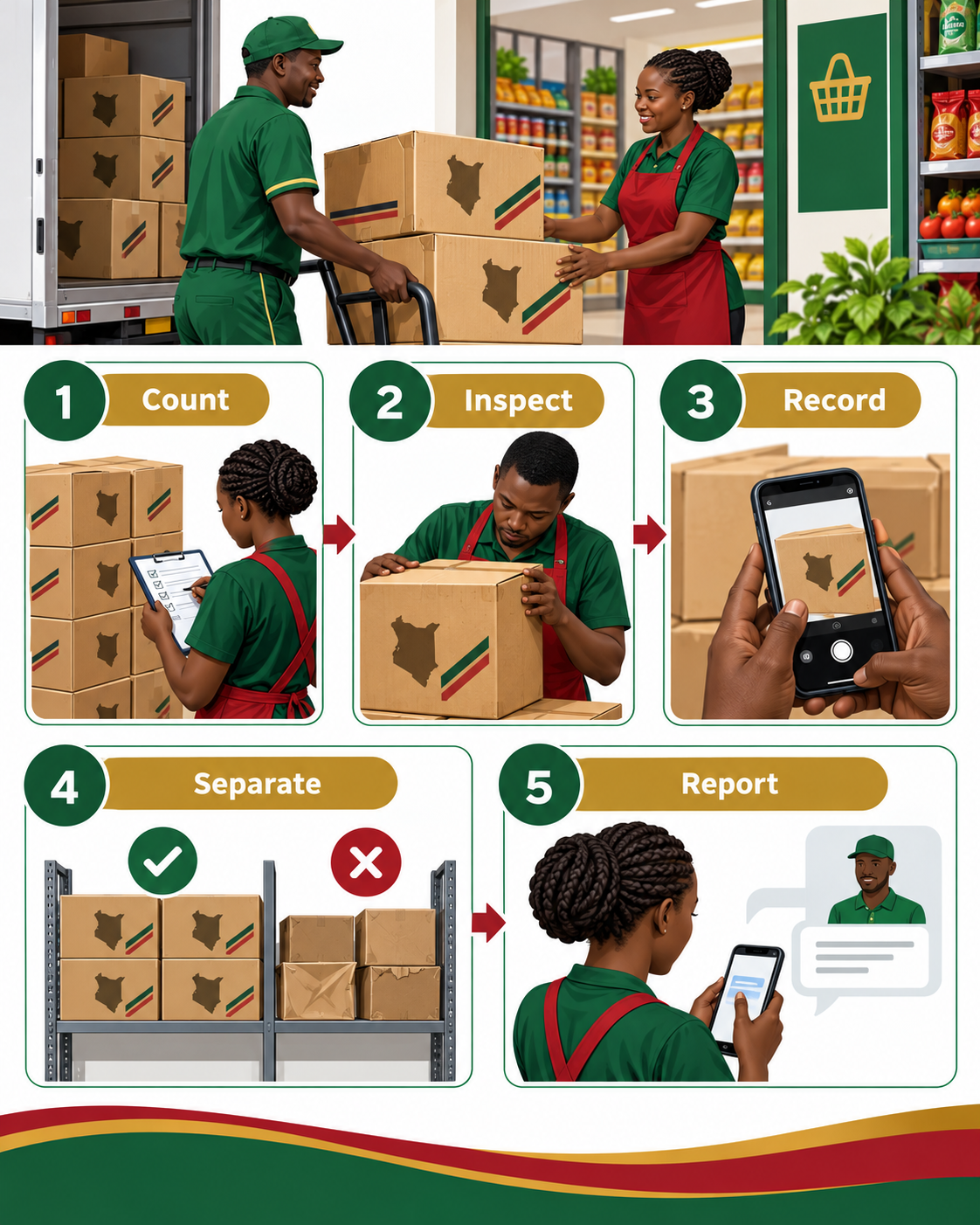
Prepare your receiving area before goods arrive. Have the purchase documents, approved specification and a simple inspection record ready. Where practical, keep the new delivery separate until initial checks are complete. Once cartons are opened and mixed with older stock, tracing a shortage or defect becomes harder.
Start with identity and quantity. Confirm that the supplier, product variant and packaging match the order. Count using the agreed unit, not merely the number of cartons. Then inspect visible condition, labels and any relevant batch information. Record damaged packaging even if the contents initially appear usable.
Decide in advance whether you will examine every item or use an appropriate sampling approach. The right method depends on product risk, order size and the defects you are trying to detect. A quick look at the top carton does not establish that the whole delivery meets the specification.
Follow the agreed acceptance procedure, and distinguish receipt of goods from confirmation that all quality checks are complete. Do not sign statements you cannot support. If a discrepancy appears, record it promptly and contact the supplier with evidence, rather than allowing the issue to disappear into routine sales.
For safety concerns, isolate affected goods and seek competent guidance before selling or using them. Keep batch records where relevant so affected units can be traced. A first order is also a learning opportunity: note which checks were useful and update your process before placing the next one.
Send a better wholesale enquiry through Viwanda
You do not need to finish every check before contacting a supplier. You do need enough information to ask a useful question. Begin with the product, intended use, approximate quantity, delivery location and the quality or packaging requirements that matter most to your business.
You can browse Kenyan-made products to identify relevant options and explore manufacturers as you build your shortlist. Treat discovery as the start of due diligence, not a substitute for it. Confirm the current product details, supplier responsibilities and order terms before committing funds.
Viwanda is currently an enquiry-led wholesale marketplace for Kenyan-made products only. Online checkout is available only for items stocked by Viwanda. For other wholesale enquiries, availability, quotations and fulfilment arrangements need confirmation for the specific order. Do not assume a listing guarantees a particular price or delivery date.
A useful enquiry might say: our business needs locally manufactured aprons for daily kitchen use; please share material options, sample arrangements, pack quantities, applicable compliance information and a quotation showing exclusions. Add your location and preferred timing, while asking the supplier to confirm what is achievable.
If you are unsure how the process works, read how Viwanda works. When ready, send your wholesale enquiry with your checklist attached. The goal is not simply to find someone willing to sell. It is to agree a first order that both businesses understand, can verify and can build on.
Frequently asked questions
Is a KEBS mark enough to approve a wholesale supplier?
No. Check that the relevant permit information matches the manufacturer and exact product, and seek confirmation from KEBS when uncertain. You should also check identity, specifications, samples and order terms. Product compliance evidence does not, by itself, establish the supplier's capacity, reliability or ability to meet your particular packaging and delivery requirements.
Must I visit the factory before placing an order?
Not every purchase requires a visit. The decision depends on the product risk, order value and evidence already available. A visit can clarify production capability, but it cannot replace compliance checks or a written specification. If you cannot travel, consider a live walkthrough, representative samples and, where justified, an independent inspection.
Should I pay a deposit to a new manufacturer?
A deposit can be a normal part of manufacturing, especially for customised goods. Before paying, verify the recipient and agree the specification, amount, production trigger and cancellation terms. Ask what evidence you will receive as work progresses. Pause if the supplier pressures you to pay while refusing basic identity information or clear written order terms.
Can I order any listed product through Viwanda checkout?
No. Viwanda currently operates primarily through wholesale enquiries, and online checkout is available only for items stocked by Viwanda. For other products, submit an enquiry and confirm the quotation, availability, payment arrangements and fulfilment terms for that order. Viwanda focuses on Kenyan-made products; listing discovery should still be followed by appropriate product and supplier checks.
Ready to take the next step?
Viwanda makes it straightforward to buy Kenyan-made goods wholesale or reach serious business buyers.
Send your wholesale enquiry