buyer guide · retail
Retail in Kenya: How to Handle Damaged Wholesale Stock and Supplier Returns
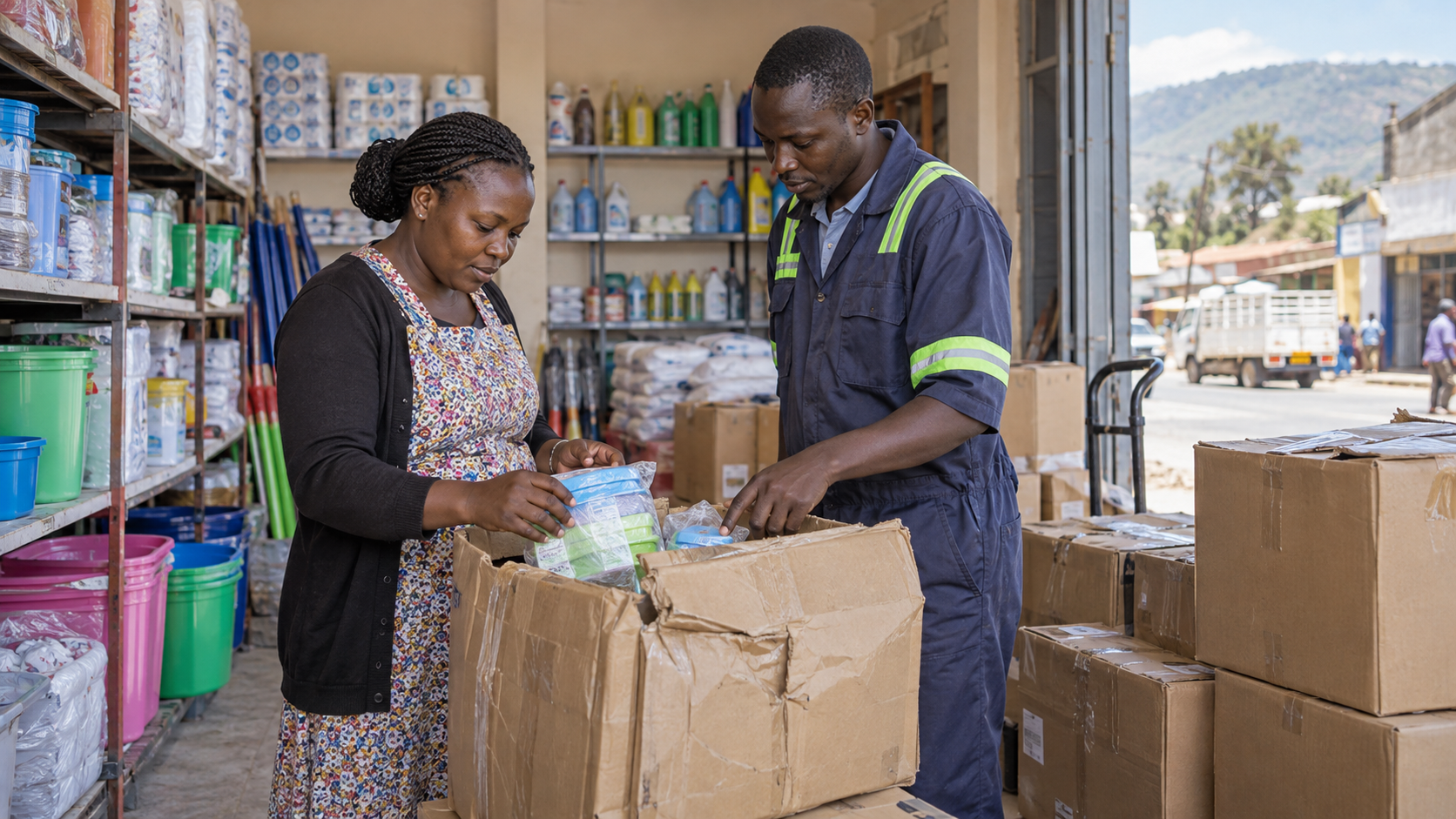
What should a Kenyan retailer do when wholesale stock arrives damaged?
A carton arrives at your shop in Nakuru with a wet corner. Inside, several packs are stained, but the driver wants a signature and your customers are waiting. Should you accept everything, reject the whole delivery or pay and argue later? The practical answer starts with separating receipt from acceptance: record what arrived, identify what is wrong and avoid treating disputed units as saleable stock. Your signature should not hide a problem you can already see.
This guide focuses on damaged, leaking, broken or otherwise compromised wholesale goods bought for resale. It also covers shortages and wrong items where the same evidence process helps. It is not a promise that every supplier must accept every return. The available remedy depends on the agreement, the facts and any applicable law. A written returns arrangement makes those conversations easier, especially when the buyer, supplier and transporter are different businesses.
For Kenyan retailers, the immediate goal is to protect customers without tying up more cash than necessary. Give one person responsibility for the claim, even in a small family shop. That person should connect the delivery record, photographs, supplier messages and final adjustment. If you are sourcing through Viwanda, use how Viwanda works to understand its enquiry-led wholesale process. Viwanda lists Kenyan-made products only; online checkout is available only for items stocked by Viwanda. Confirm the seller and returns contact for your particular order.
Agree return terms before you commit to an order
The easiest damaged-stock claim is often the one prepared before dispatch. Ask the supplier to explain the process in writing while you are discussing quantities and payment. A WhatsApp message or email can help create a record, but make sure the answer refers to your actual order. A general statement that returns are accepted leaves important questions unanswered. Does it cover manufacturing defects, transport damage, wrong variants, short deliveries or simply stock that has not sold?
Separate faulty goods from a change of mind. A supplier may handle a leaking product differently from an unpopular colour or a pack size that your customers dislike. Do not assume that slow sales create a right to return stock. Equally, do not assume that a blanket no-returns statement settles every defect or safety complaint. Where the position is disputed or the value is significant, seek appropriate advice rather than relying on a slogan printed on an invoice.
Ask for a workable reporting process, not just a deadline. If damage is hidden inside sealed cartons, explain when your team normally opens them. Confirm who may approve a remedy and what evidence they require. When comparing Kenyan manufacturers, consider whether their returns arrangements suit your shop’s receiving capacity. Clear terms are part of commercial value, even when two products appear similar on a shelf.
- Define which problems qualify for review and how hidden defects should be reported.
- Record the reporting window, contact person and evidence needed for a claim.
- Agree who arranges collection and who pays any approved return transport costs.
- Clarify whether the remedy may be replacement, refund, repair where suitable, or account credit.
- Ask how an approved claim will affect an unpaid invoice or the next order.
Check deliveries without turning your receiving area into a bottleneck
You do not need a complicated warehouse system to receive goods properly. Create a clear space, keep the order details nearby and nominate someone to count. Start with the outside: look for crushed corners, damp patches, broken seals and signs of leakage. Compare the delivered product names, pack sizes and quantities with the order and delivery note. Check relevant dates and batch markings where applicable, particularly when the remaining selling life matters to your business.
Move from visible checks to a sensible inspection of the contents. For a small delivery, checking every unit may be practical. For a larger one, agree a checking method that reflects the product’s risk and the supplier’s terms. A glance at one undamaged carton does not prove the rest are sound. Where full inspection is not possible immediately, note that limitation accurately and complete the remaining checks promptly. Do not describe unchecked goods as fully inspected.
Keep the driver informed without turning the handover into an argument. Ask them to acknowledge visible damage or a shortage on the delivery record, and request a copy or photograph. If they decline, document your observations and tell the supplier immediately. Signing with an accurate reservation can create useful evidence, but it does not automatically decide legal responsibility. For anything leaking, contaminated or unsafe to handle, prioritise safety over counting speed and follow suitable product-specific guidance.
- Match the delivery to the order before mixing it with older stock.
- Photograph visible problems while cartons are still in their arrival condition.
- Record actual quantities received, including damaged units and missing units separately.
- Keep suspect goods apart and notify the named supplier contact promptly.
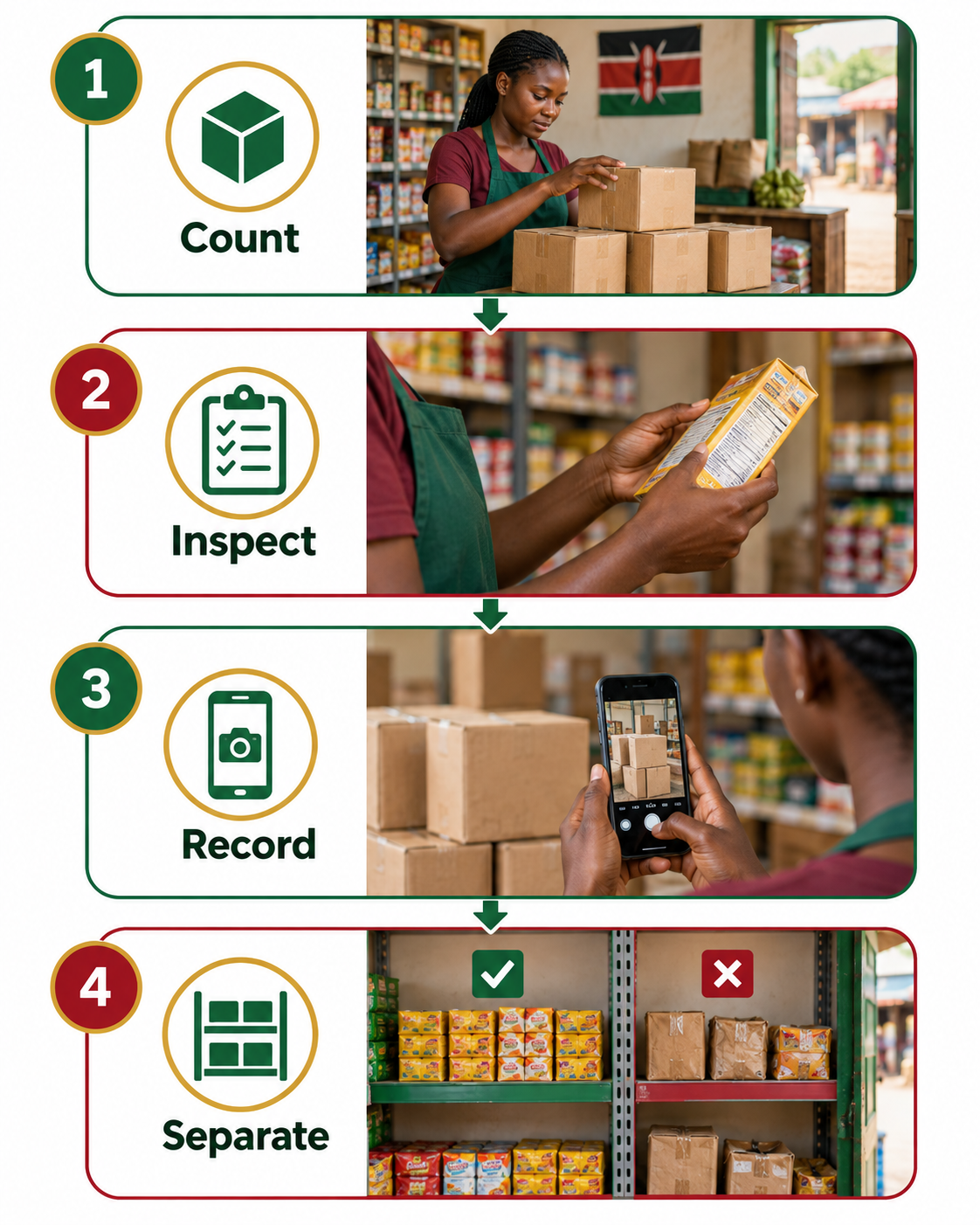
Build a claim that the supplier can investigate quickly
A useful claim lets someone who was not at your shop understand the problem. Begin with the invoice or order reference, delivery date, product description and affected quantity. Describe observable facts instead of jumping to blame. Saying that six bottles have liquid around their caps is clearer than saying the factory packed everything badly. Add whether the outer carton was wet, whether seals were intact and when the issue was first discovered.
Photographs should connect the whole delivery to the individual defect. Take a wider image of the affected carton, a closer image of the problem and an image of the product label or batch marking where available. Keep original files and relevant messages. Avoid editing images in ways that could obscure context. A short video may help show intermittent leakage or a broken fitting, but it should support a clear written summary rather than replace one.
Make your request specific and realistic. Identify what can still be sold, what must remain isolated and what remedy you prefer. Ask the supplier to acknowledge receipt and give a proposed review date. Keep follow-ups in the same message thread where possible. This reduces repeated explanations when a salesperson hands the issue to accounts or production. Follow the reporting steps below for each separate delivery, even when you have bought from the same supplier for years.
- Open a claim record using the order reference and the date the problem was discovered.
- Count affected units and separate damage, shortage and wrong-item issues.
- Attach clear photographs, relevant batch details and the delivery record.
- Send a factual summary to the authorised contact and request a preferred remedy.
- Ask for written acknowledgement, handling instructions and a review date.
- Record every decision until the goods and the financial adjustment are both resolved.
Choose between replacement, refund and credit with your cash needs in mind
An accepted claim is not yet a completed recovery. The remedy must actually work for your shop. A replacement may be useful when the product sells steadily and you still need it. Ask whether the supplier will replace only the affected units or a full pack, and confirm any collection arrangements. Do not assume replacements will arrive with the next vehicle. Get the proposed arrangement in writing and plan your shelf availability around what has been confirmed.
A refund may suit a retailer who no longer needs the goods, but it must be agreed and tracked through to receipt. Confirm the amount, payment method and expected processing arrangements without treating an estimate as cash already available. If the invoice remains unpaid, ask how the approved claim should be reflected in the balance. Do not deduct an amount unilaterally and assume the supplier’s accounts team will interpret the payment correctly.
A credit note records a financial adjustment; it is not necessarily money in your bank account. Clarify whether the credit reduces an outstanding invoice or can be used against a future purchase. Ask whether there are agreed conditions on its use. Where a tax invoice needs correction, the supplier and your accountant should follow the applicable KRA requirements, including eTIMS where relevant. Keep the original invoice, credit note and claim reference together so the same loss is not counted twice.
Before accepting account credit, consider whether you genuinely intend to buy again. A retailer can appear to have recovered the full value while still lacking cash to restock elsewhere. Compare the practical outcomes, not just the amount written on the document. Record any remaining disagreement about transport charges separately from the value of the goods.
Keep unsafe or disputed goods away from customers
Not all damage has the same consequence. A scuffed outer carton may leave the product unaffected, while a broken seal, unexplained leak or contamination can raise a safety concern. Do not decide that a product is safe merely because it looks usable. Follow its storage and handling instructions, and seek competent advice where needed. For standards questions involving Kenyan-made goods, the Kenya Bureau of Standards is an official starting point; product-specific regulators may also be relevant.
Create a clearly marked holding area that staff cannot confuse with saleable stock. Record what is there and why. Keep affected goods under the appropriate storage conditions while the claim is reviewed, unless doing so would itself be unsafe. Never decant leaking chemicals into beverage bottles, mix unknown substances or place contaminated goods beside food. If immediate safety action is necessary, document what you did and why, and contact the supplier or relevant authority as appropriate.
Do not repair packaging, relabel dates or discount a potentially unsafe product simply to recover money. A supplier’s commercial approval to sell something is not a substitute for safety or compliance. If a customer has already bought an affected item, keep their complaint details and connect them to the delivery or batch where possible. Avoid collecting unnecessary personal information. Ask for guidance on further action, including whether other units should be withdrawn from sale. Arrange disposal only through a suitable process, retaining evidence where safe and lawful.
“A damaged-stock claim is not finished until the customer is protected and the shop’s records are clear.”— Dr. Chomba Chuma, Founder, Viwanda
Resolve transport responsibility without paying for the same problem twice
Damage discovered on arrival does not, by itself, prove who caused it. The issue may come from packing, loading, transport, unloading or a defect that becomes visible later. Start with the agreed delivery terms and the evidence, not accusations. Who booked the vehicle? Who packed and loaded the goods? What condition was recorded at collection? These questions help establish the sequence of events, although they do not alone settle every liability question.
If you arranged collection through a transporter, contact that business promptly as well as the supplier. Ask about its claim procedure and retain dispatch photographs, consignment documents and handover records. If the supplier arranged transport, ask the supplier to coordinate the investigation rather than leaving your shop to chase several strangers. Either way, avoid accepting an unsupported explanation that the other party is responsible. Request a written position tied to the order and delivery evidence.
Before returning goods, agree the destination, receiving contact, packing requirements and transport charges. A return sent without authorisation can create a second dispute if nobody accepts it. Obtain proof of handover and a receiving acknowledgement showing what was returned. When working with Kenyan distributors, ask whether returns go to the distributor or directly to the manufacturer. Do not send unsafe goods through an ordinary delivery service without checking whether that movement is lawful and suitable. Keep any transport claim linked to the supplier claim so you do not request or record recovery twice for the same loss.
Track every claim until stock and accounts agree
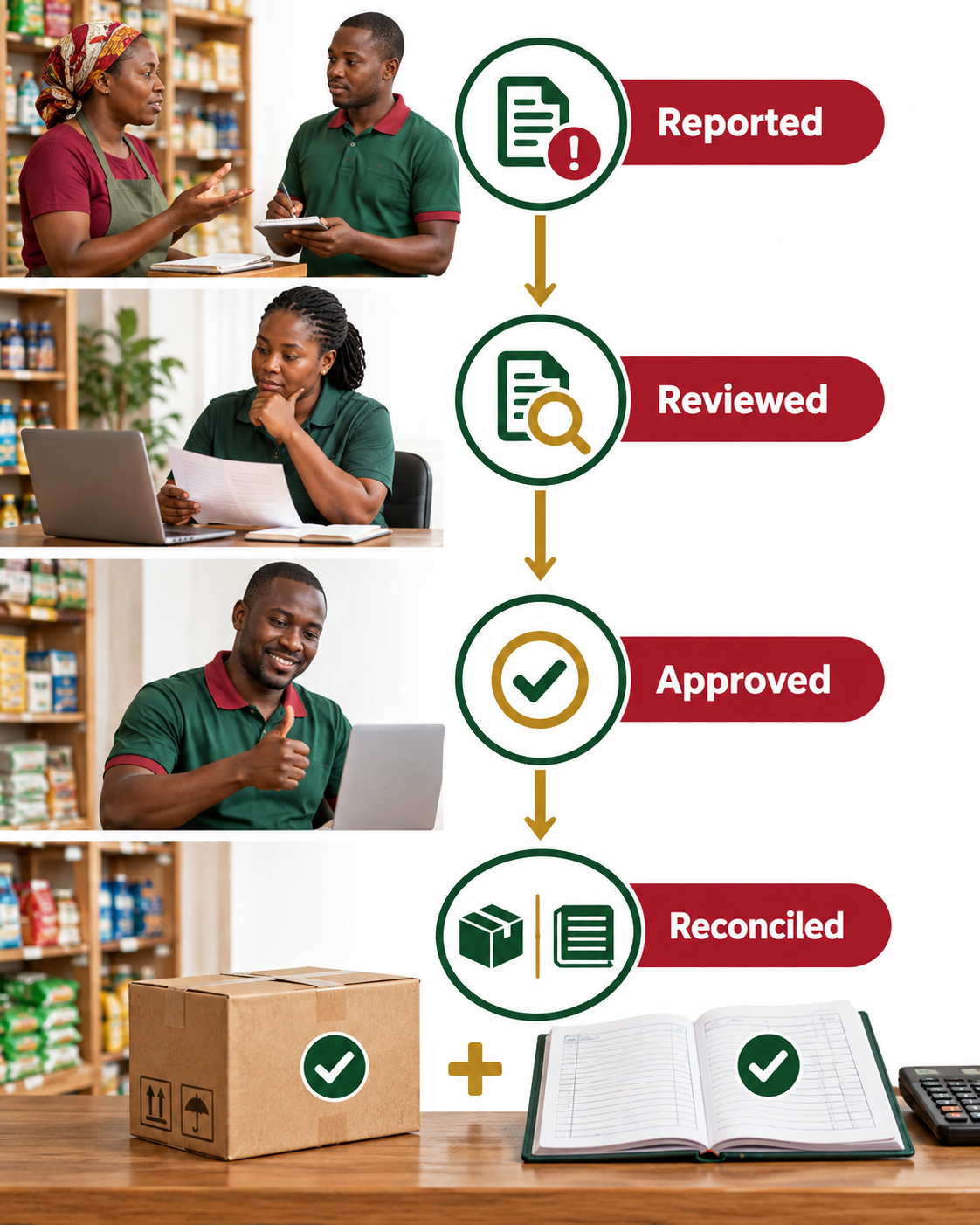
A notebook or simple spreadsheet can manage returns if it has a clear owner and is updated consistently. Give each claim a reference and record the supplier, order, affected product, quantity, reported date and current status. Distinguish between reported, under review, approved and completed. Those stages matter because an encouraging phone call is not a confirmed refund, and an approved replacement is not stock you can sell today.
Reconcile the physical goods with the financial outcome. If the supplier collected damaged units, keep the collection record. If replacement goods arrived, record them without treating them as a new purchase payable again. If a credit note was issued, check that it appears correctly in your supplier account. Where bookkeeping or tax treatment is unclear, involve your accountant. The purpose is a traceable adjustment, not a homemade accounting shortcut that causes trouble later.
Review open claims regularly and escalate overdue responses politely. Share the reference, the last agreed action and the decision you need. If a dispute remains unresolved, consider the contract’s dispute process and suitable professional advice, especially where the amount justifies it. Also look for repeat patterns: recurring leakage in one pack, crushed cartons on one route or claims repeatedly lost between sales and accounts. Those patterns can guide better ordering, packing and receiving decisions without assuming that every incident has the same cause.
- Track goods awaiting inspection, collection, replacement or safe disposal separately.
- Record the requested remedy and the remedy actually approved.
- Link refunds and credit notes to the original invoice and claim.
- Close the claim only when both the physical stock and account adjustment reconcile.
Use the next enquiry to prevent a repeat problem
A return should teach your business something useful. After resolving it, ask what needs to change before the next dispatch. The answer might be stronger cartons, dividers, clearer handling instructions, different stacking or a better receiving appointment. Keep requests specific to the problem you observed. Asking a supplier to improve quality is less actionable than explaining that bottles on the bottom layer arrived crushed and requesting a packing review.
Update your shop’s own routine too. Staff should know who can sign delivery documents, where suspect stock goes and who contacts the supplier. Keep the process short enough to follow during a busy trading day. Review whether delayed inspection, poor storage or missing records made the last claim harder to resolve. Prevention is a shared operating task, not simply a demand that the supplier carry every risk.
When you browse Kenyan-made products, include returns questions alongside specifications and quantities. State the product you need, your location, the intended use and any concerns about packaging or handling. Viwanda is currently enquiry-led for wholesale, so confirm the actual supplier’s commercial terms before committing. Online checkout applies only to items stocked by Viwanda. Ready to plan your next order more carefully? Send a wholesale enquiry and ask for product details, availability and a written returns process. A clear agreement gives both buyer and seller a better starting point when something goes wrong.
Frequently asked questions
Can I return wholesale stock simply because it has not sold?
Do not assume so. Slow-moving stock is different from defective or incorrectly supplied goods. Ask whether your agreement includes stock rotation, exchange or sale-or-return terms. Get approval before dispatching anything back, and confirm product condition requirements and any agreed charges.
Should I refuse the entire delivery if only some goods are damaged?
Not automatically. Identify affected quantities and consider safety, the delivery terms and whether sound goods can be separated. Record any partial acceptance accurately. If contamination or another risk could affect the whole consignment, isolate it and seek appropriate guidance before selling any units.
What if I discover damage after signing the delivery note?
Report it promptly and explain when and how you discovered it. Keep packaging, photographs, batch details and storage records where relevant. A signed delivery note is important evidence, but the claim’s outcome also depends on the defect, agreed terms and applicable law.
Does Viwanda provide automatic returns for every listed product?
Do not assume a platform-wide automatic return arrangement. Viwanda is an enquiry-led wholesale marketplace for Kenyan-made products, with online checkout only for items it stocks. Confirm the seller, reporting process and applicable returns terms for your order before paying or accepting dispatch.
Ready to take the next step?
Viwanda makes it straightforward to buy Kenyan-made goods wholesale or reach serious business buyers.
Enquire about wholesale stock and returns terms