seller guide · Growth, digital selling & exports
From Cottage Industry to Wholesale Supplier in Kenya
1. Start with a product you can supply repeatedly
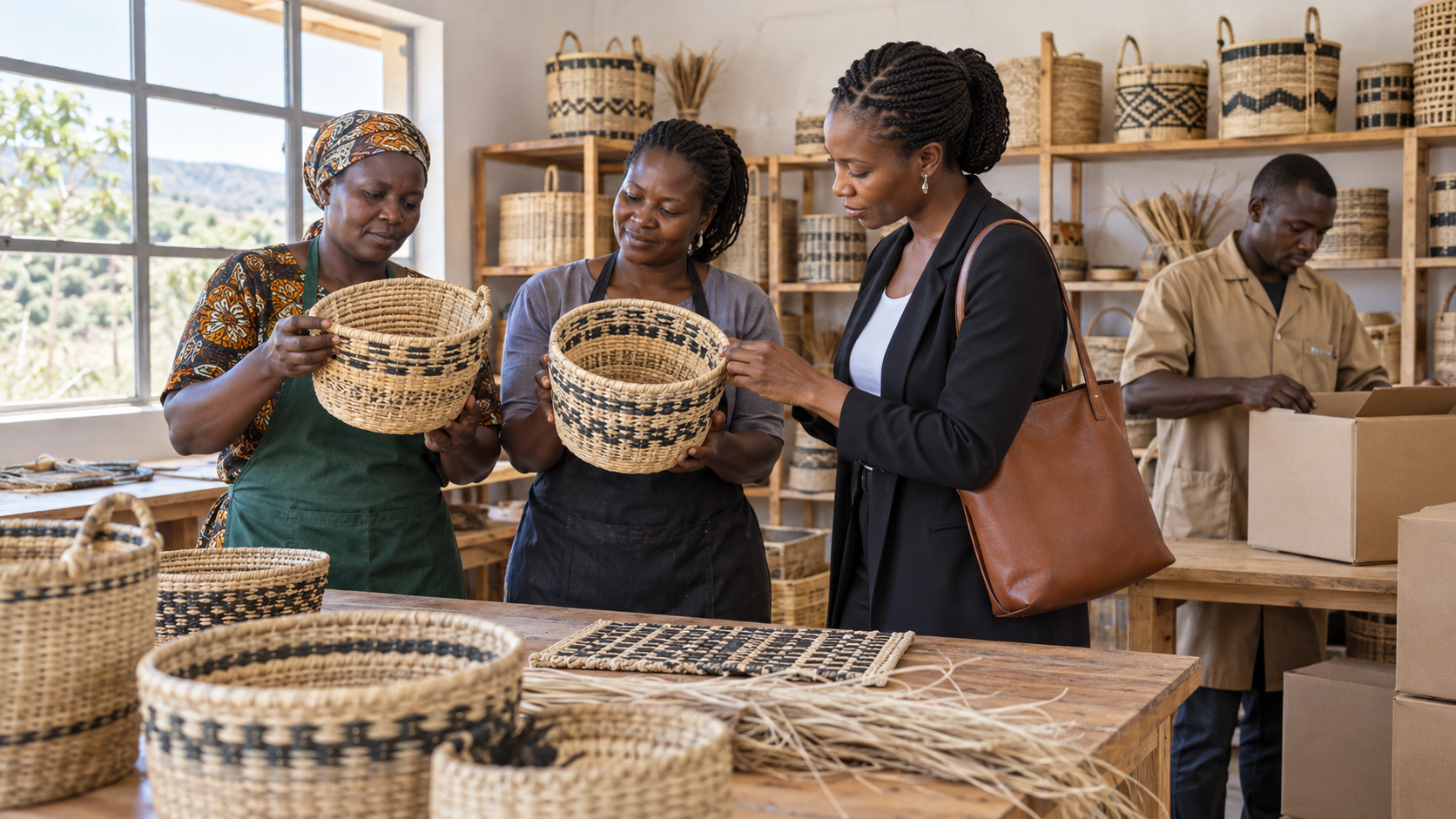
A home workshop can produce something excellent. Becoming a wholesale supplier means producing that same quality repeatedly, in agreed quantities, with clear records and dependable communication. Whether you make woven baskets in Kitui, soap in Nakuru or furniture in Kisumu, buyers need confidence that the next order will match the sample they approved.
This change does not always require a bigger building or expensive machinery. Often, the first improvement is a simpler range, a written production method and a clear understanding of your limits. Before looking for large orders, identify the products you already make well and the problems that slow you down.
Review your recent orders and ask which products were easiest to repeat, attracted repeat customers and left enough money after costs. A popular item is not automatically a good wholesale item. If it takes too much custom work or depends on materials you struggle to replace, scaling it may create disappointment.
Choose a small core range and describe each item precisely. Record its materials, dimensions or weight, finish, colour options and intended use. Keep one approved sample where practical. This becomes your reference when training workers, ordering packaging and discussing specifications with buyers.
Set an honest starting capacity based on normal working conditions, not your best day. Include cleaning, preparation, drying, maintenance and checks. A useful starting promise is one you can keep without skipping inspections or working through every night. Wholesale growth begins with repeatability, not the size of the first enquiry. Keeping this focus also makes later investment decisions much easier.
2. Formalise the business around what you actually make
Formalisation helps buyers understand who they are dealing with and helps you separate business obligations from household spending. Begin by checking that your business registration, tax position and relevant county permissions fit your activities and premises. Requirements vary by business structure, location and product, so avoid copying another producer’s checklist without verification.
Product compliance needs its own attention. Food, cosmetics, electrical goods and other categories can have different requirements for standards, testing, labelling and approvals. Ask the Kenya Bureau of Standards about the standards and certification arrangements relevant to your product. Do not print a certification mark simply because a packaging supplier offers it.
The Kenya Revenue Authority provides guidance on tax registration and electronic invoicing. Check which obligations apply to your business and how to meet them. A buyer may request supplier documents before placing an order, but their checklist does not replace your own responsibility to comply with applicable requirements.
Build a simple supplier folder that you can update without searching through old messages. Share only the documents needed for a legitimate transaction, and protect sensitive identification and account information. Formalisation should create a usable operating system, not just a pile of papers that nobody checks again.
- Keep business registration details and current contact information together.
- Confirm county and sector permissions for your actual production activities.
- Record applicable standards, test reports and certification renewal dates.
- Check tax and invoicing obligations directly with KRA.
- Maintain a buyer-ready profile without exposing unnecessary personal information.
3. Turn your production method into a repeatable routine
Many cottage businesses depend on one person’s memory. That works until orders increase, someone is absent or a new worker joins. Write down your production method in plain language, using photographs where useful. A short instruction sheet beside the workbench is often more useful than a long manual nobody opens.
Separate what must remain fixed from what can vary. A handmade basket may have natural differences in texture, but its agreed size and strength still matter. A buyer should understand acceptable variation before ordering. For products with safety implications, follow the applicable standards and validated processes rather than relying on appearance alone.
Use a batch or job reference that connects finished goods to production dates, workers and material purchases. This does not need to begin with complicated software. A well-kept notebook or spreadsheet can help you investigate complaints, identify affected stock and avoid repeating mistakes. Check the records regularly, not only when something goes wrong.
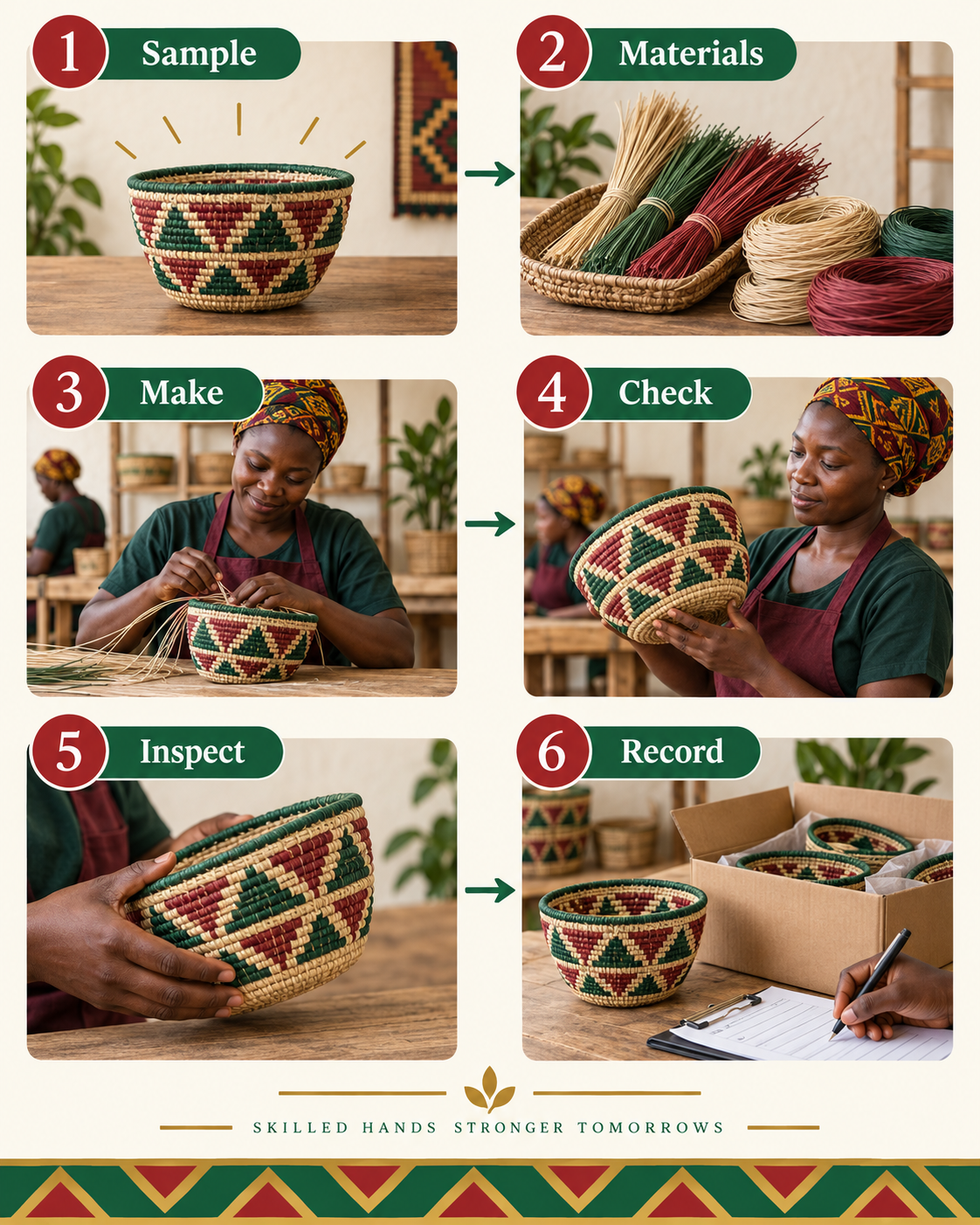
- Choose an approved sample and write down its measurable features, including any acceptable handmade variation.
- List the materials and checks needed before production starts, including how unsuitable inputs are separated.
- Write the production sequence, identifying critical settings, measurements or handling instructions where relevant.
- Check work at important stages so defects are caught before more labour and materials are added.
- Inspect finished goods against the agreed specification, and record rejected or reworked items honestly.
- Assign a batch or job reference, approve stock for release and keep a record of where it goes.
4. Make packaging consistent, useful and truthful
Packaging has several jobs: protecting the product, explaining what it is and making handling easier. A wholesale buyer may care as much about how cartons stack as how the individual item looks. Design both the customer-facing pack and the outer pack with their actual use in mind.
Start with protection. Test whether your product survives the handling and transport conditions you expect. Check seals, cushioning, moisture exposure and movement inside the carton as relevant. A beautiful label cannot rescue damaged goods. Where practical, send a trial pack through the intended route and inspect it on arrival.
Next, standardise the details. Use consistent product names, pack sizes, measurements and carton quantities. Ensure the information on your sample, quotation, invoice and packaging agrees. Buyers should not have to guess whether a price refers to one piece, a set or a carton. Changes to pack size should be discussed before dispatch.
Labelling requirements depend on the product. Confirm applicable requirements for ingredients, net contents, safety information, manufacturer details, dates and other particulars rather than assuming one template suits everything. Never invent shelf life, certification claims or health benefits. If a buyer requests a barcode, first clarify the identification system they use.
Choose packaging you can obtain consistently and afford within your costs. Keep an approved artwork file and a physical reference pack. Check printed packaging before accepting a large quantity. A spelling error is inconvenient; an incorrect weight, missing warning or misleading claim can create much bigger problems for both you and the buyer.
5. Price wholesale orders without starving the business
Wholesale pricing should come from your costs and commercial terms, not from guessing what sounds attractive. Calculate materials, labour, packaging, power, consumables and expected wastage. Include a reasonable share of expenses such as rent, maintenance and administration. Your own working time is a cost, even if you do not yet draw a regular salary.
Then consider what changes with the order. Special labels, smaller production runs, extra inspection, transport arrangements and delayed payment can affect the cost of serving a buyer. Separate one-off development work from repeat production where appropriate. A larger order is not automatically cheaper if it requires overtime or new equipment.
Set a minimum order quantity that reflects practical production and packing needs. Explain whether it applies to each product, colour, size or combined order. If you offer different quantity levels, calculate them rather than applying an automatic discount. You should understand the margin left after all the work of fulfilling the order.
Payment terms deserve the same care as price. Buying materials today and getting paid much later can leave a profitable business short of cash. Agree deposit arrangements, balances and any credit terms in writing. Before accepting credit exposure, verify the buyer and consider whether your business can survive a late payment.
- State the product specification and the unit used for pricing.
- Show order quantities, packaging and any separately charged work.
- Clarify applicable taxes and whether transport is included.
- Give quotation validity and an order-specific production estimate.
- Record payment terms and the process for approving changes.
6. Prepare a digital catalogue that answers buyer questions
A wholesale catalogue does not have to be expensive. It needs to make comparison and ordering easier. Use clear photographs of the real product, including scale, finish and packaging. Avoid heavy editing that changes colour or hides defects. If an image shows a customised version, explain which features differ from your standard item.
Give every product a simple reference code and a consistent name. Add materials, dimensions or weight, available variants, packing units and minimum order requirements. Where relevant, include verified care instructions and storage guidance. Tell buyers what information you need before preparing a quotation, especially for customised or made-to-order products.
Use digital channels to begin a useful conversation rather than posting only attractive images. A retailer may ask about shelf presentation; a hotel may prioritise durability and replacement supply. Your catalogue should help both understand whether the product suits their needs. Keep stock and production availability current so yesterday’s post does not become tomorrow’s misunderstanding.
You can browse Kenyan-made products to understand how products are presented on Viwanda and learn how Viwanda works before making an enquiry. Viwanda is currently enquiry-led wholesale for Kenyan-made products only. Online checkout is available only for items stocked by Viwanda, not automatically for every product discussed or displayed.
Keep one master version of your catalogue and date your quotations. When details change, update the channels you actually use. A modest, accurate catalogue builds more trust than a polished document containing products you can no longer supply. Replying clearly and keeping records matters just as much as getting attention online.
7. Approach wholesale buyers with a clear offer
Look for buyers whose customers, order patterns and quality expectations fit your product. These may include independent shops, specialist retailers, hospitality businesses, distributors or other manufacturers using your goods as inputs. A long contact list is less valuable than a short list of businesses with a genuine reason to buy.
Research each buyer before making contact. Notice the products they already carry, their packaging style and the customers they serve. Then introduce your business briefly, explain the product’s practical value and ask about their supplier process. Avoid sending a large, unexplained attachment or making claims you cannot demonstrate.
Offer samples under clear terms. Explain whether they are chargeable, what they represent and whether production samples may show agreed variation. Ask the buyer to evaluate specific features such as finish, strength, pack suitability or ease of resale. Written feedback is more useful than a general statement that the product looks good.
Explore Viwanda’s manufacturer pages and distributor pages to understand the marketplace’s supply-side focus. When you send a wholesale enquiry, include your product category, business location, intended quantities and the support you are seeking. This creates a more useful starting point than simply asking for customers.
Follow up politely and keep notes of the next action. Do not mistake interest for a confirmed order, or a verbal quantity estimate for guaranteed sales. Before committing materials, obtain written agreement on specifications, quantities, payment and fulfilment arrangements. Protect buyer information, and ask permission before using their name, logo or feedback in your marketing.
8. Use the first order to test the whole system
A first wholesale order tests more than production. It reveals whether your quotation, purchasing, packaging, communication and payment records work together. Treat it as a controlled learning opportunity. Where possible, agree a manageable trial order before making commitments that would stretch your people, equipment or working capital.
Review the order against available materials and real capacity before accepting it. Record the approved sample, quantities, variants, packaging and delivery responsibilities. Confirm who pays for transport, where handover happens and how receipt will be acknowledged. These details are easier to settle before the goods leave your workshop.
During production, tell the buyer promptly if something threatens the agreement. Explain the issue and propose realistic options rather than quietly changing materials or reducing quality. Any change to an approved specification should be agreed in writing. A delayed conversation usually makes an already difficult situation more expensive.
Before dispatch, count and inspect the order, photograph the packed goods where useful, and prepare the relevant documents. Keep a record of what was supplied and when it was handed over. Agree a fair process for reporting shortages, damage or defects, while recognising applicable legal obligations.
After delivery, ask focused questions about condition, presentation and product performance. Compare your estimated costs and production time with what actually happened. Record the cause of rework, wastage and complaints. The aim is not to prove that the order went perfectly; it is to make the next order easier, safer and more predictable for everyone. Share the lessons with everyone involved.
9. Expand the bottleneck, not everything at once
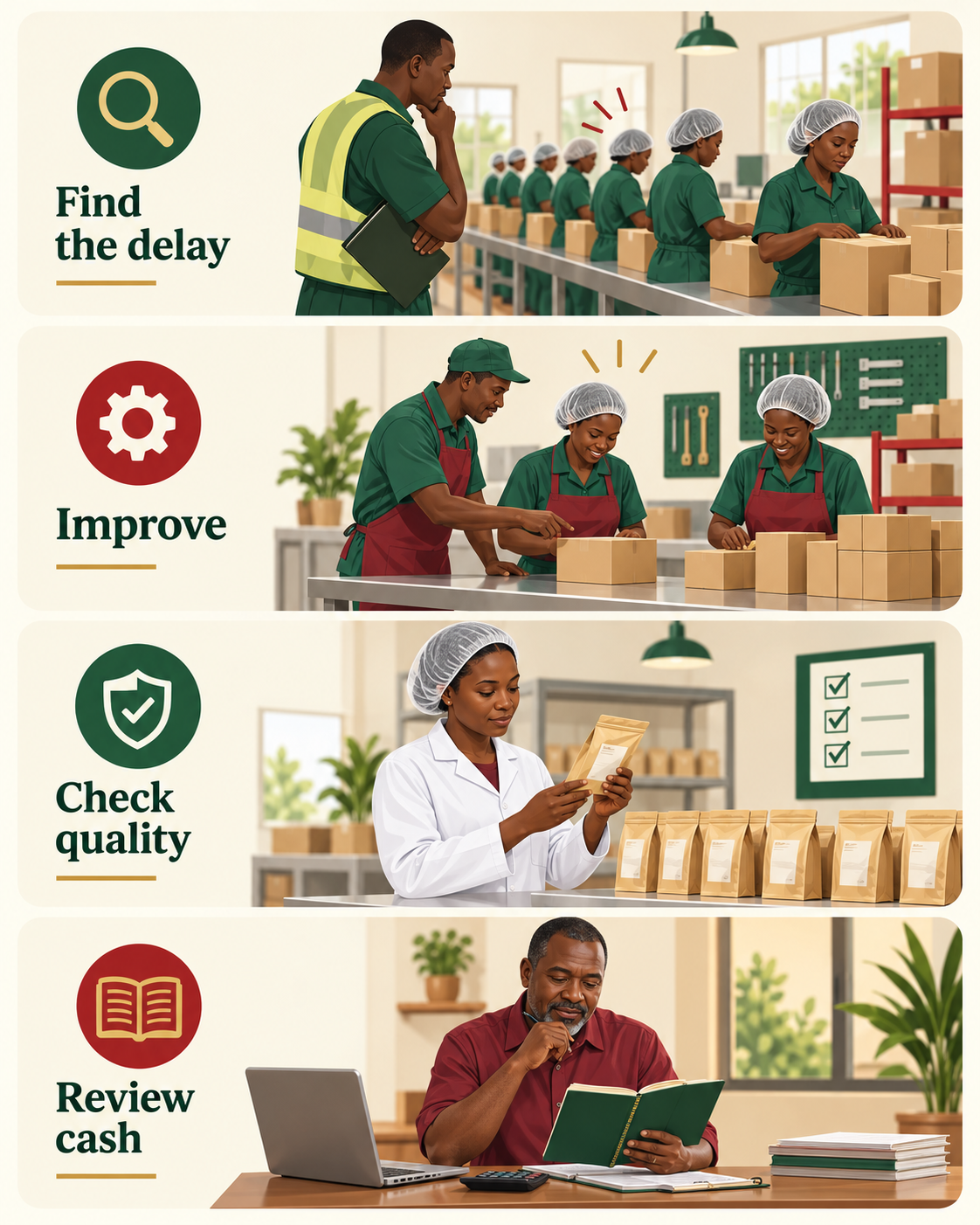
Once repeat orders appear, identify the stage that limits dependable output. It may be cutting, drying, finishing, inspection or packing rather than the main production machine. Measure where work waits and where errors occur. Buying more equipment at the wrong stage can increase unfinished stock without increasing saleable output.
Compare practical options before spending. Better workbench layout, preventive maintenance, clearer instructions or improved material storage may solve the immediate problem. If you hire, train against your written method and approved sample. Give someone clear authority to stop or separate work that does not meet the specification.
Keep control when outsourcing a stage. Agree materials, quality checks, confidentiality where relevant and responsibility for rejected work. Inspect incoming outsourced items rather than assuming another workshop has followed your requirements. Your buyer will still associate the finished product with your business.
Track a small set of useful measures: completed orders, rejected items, rework, material waste, outstanding payments and repeat purchases. Review them together. Rising sales alongside rising defects and unpaid invoices may signal strain, not healthy growth. Keep enough room in the schedule to maintain equipment and resolve problems.
- Add capacity where delays consistently limit finished, approved output.
- Secure reliable inputs before taking on larger recurring commitments.
- Train another person to perform and check critical tasks.
- Review cash needs before agreeing new buyer credit terms.
“Grow at the speed at which you can protect quality, keep your promises and pay for the next production run.”— Dr. Chomba Chuma, Founder, Viwanda — editorial view
10. Build export readiness from a strong local foundation
Export interest can be exciting, but it introduces another layer of requirements and risk. A product accepted by a Kenyan buyer may need different labelling, testing or documentation elsewhere. Start with a specific destination and buyer rather than preparing vaguely to sell across Africa or overseas.
Ask the prospective importer about their requirements, then verify relevant rules with the appropriate authorities and qualified advisers. Depending on the product and destination, you may need to address customs documents, product registration, packaging, origin evidence and transport conditions. Buyer instructions alone are not proof that a shipment is compliant.
Do not assume that an African destination automatically means duty-free access under the African Continental Free Trade Area. Preferential treatment depends on applicable arrangements, origin rules and procedures. Consult official AfCFTA information and relevant customs guidance before quoting on that basis. Make sure any adviser understands your actual product and destination.
Protect payment and fulfilment arrangements as carefully as product quality. Verify the customer, clarify the currency and agree who handles transport, insurance and customs responsibilities. Assess a trial shipment before accepting a commitment that could absorb your working capital. Export growth should build on reliable records, not replace them.
Your next move can remain simple: select your core products, finish their specifications, check compliance and prepare one clear wholesale offer. Then start a wholesale conversation with Viwanda, explaining what you make, where you produce it and the quantities you can realistically support. Build from orders you can fulfil well, and let dependable performance become your strongest sales message.
Frequently asked questions
Do I need a large factory before selling wholesale?
No. You need suitable production conditions, applicable approvals and the ability to supply agreed quality and quantities. A small workshop can begin with manageable orders. Check whether your premises are appropriate and permitted for your activity before investing in expansion.
How should I choose my minimum wholesale order?
Base it on production setup, material purchasing, packing units and order-handling costs. Calculate whether the quantity leaves a workable margin. Explain whether the minimum applies per product or across a mixed order, and avoid copying another supplier’s minimum without checking your costs.
Can handmade products meet wholesale quality expectations?
Yes, when the important features are consistent and natural variation is agreed beforehand. Use an approved sample and written specifications. Explain which differences are part of the craft and which count as defects, while meeting any applicable safety and product requirements.
Can every Viwanda wholesale order be paid for through online checkout?
No. Viwanda is currently enquiry-led wholesale for Kenyan-made products only. Online checkout exists only for items stocked by Viwanda. For other enquiries, confirm specifications, availability, pricing, payment and fulfilment arrangements before treating the transaction as an agreed order.
Ready to take the next step?
Viwanda makes it straightforward to buy Kenyan-made goods wholesale or reach serious business buyers.
Start your wholesale growth conversation