buyer guide · Payments, escrow & logistics
Five Benefits of Buying Kenyan-Made Products Through a B2B Marketplace

What a B2B marketplace should do for your buying process
Buying stock for a shop or supplies for an institution involves more than finding a product. You must choose the right specification, agree the quantity, arrange payment and make sure someone can receive the goods. A low headline price does not settle these questions.
A B2B marketplace brings business buyers and sellers into a shared discovery and enquiry channel. For Kenyan-made products, this can make it easier to find relevant options without starting every purchase with a fresh search through contacts, messages and unrelated listings.
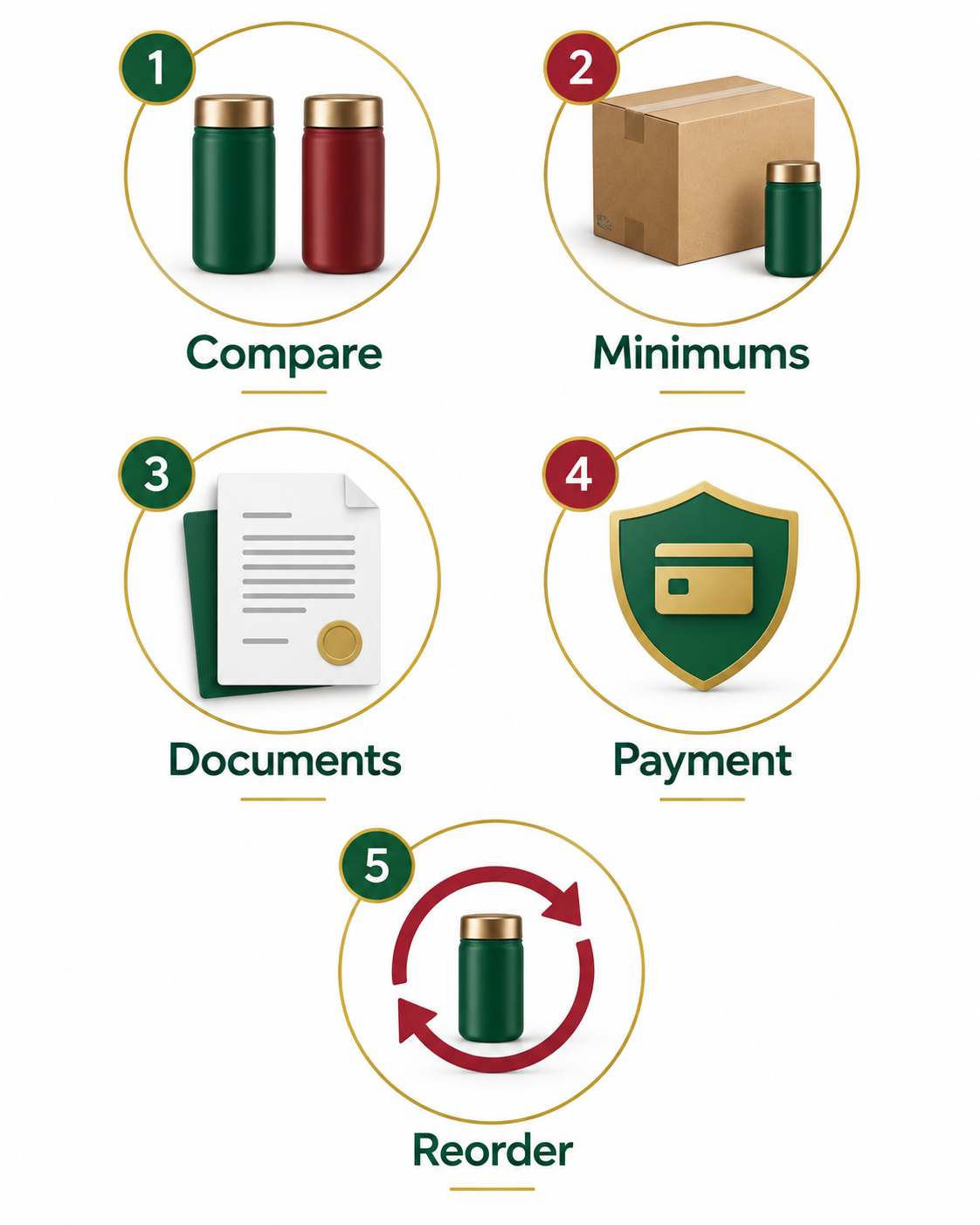
The five useful benefits are clearer supplier comparison, better conversations about wholesale minimums, more organised documentation, clearer payment and delivery coordination, and easier repeat ordering. None is automatic. Each depends on the information you request and the terms both parties accept before money changes hands.
Viwanda currently operates as an enquiry-led wholesale marketplace for Kenyan-made products only. Online checkout exists only for items stocked by Viwanda. For other purchases, start with an enquiry and establish the quotation, seller, payment arrangements and fulfilment responsibilities before committing.
You can browse Kenyan-made products to build a shortlist, then turn that shortlist into a buying brief. Whether you run a neighbourhood shop, school, clinic or catering business, the aim is the same: make a purchase that fits your actual needs and leaves a clear record for everyone involved.
Benefit one: compare suppliers against the same buying brief
Supplier comparison becomes useful when every seller answers the same question. Asking several businesses for their best price can produce quotations for different sizes, materials, grades or quantities. Those quotations may look comparable while describing very different purchases.
Write a short specification before contacting sellers. A retailer buying cleaning products might specify the intended use, container size and units per carton. A school buying furniture might describe dimensions, materials, finish and intended users. Include your required quantity and receiving location in either case.
Then separate essential requirements from preferences. A particular colour may be optional, while a suitable material or safety requirement is not. This distinction lets sellers suggest workable alternatives without quietly changing the product you actually need.
Use your shortlist to explore Kenyan manufacturers, but treat a listing as a starting point rather than proof of suitability. Request relevant product information and verify applicable certification through official channels where necessary. KEBS is the official reference for Kenyan standards and related certification information.
Keep the comparison on one sheet so a colleague can understand your choice. Record missing information as a question, not an assumption. A supplier who provides a complete response may be easier to assess than one whose quotation leaves important costs or specifications unanswered.
- Compare the same product specification, unit of measure and order quantity.
- Ask whether quoted amounts include applicable taxes, packaging and transport.
- Record availability, quotation validity and any conditions attached to supply.
- Check the proposed payment recipient and identify who will issue the invoice.
Benefit two: discuss wholesale minimums before tying up cash
A wholesale minimum is not always a single number. A supplier may set a minimum per product, carton, colour, production run or total order. Understanding which minimum applies helps you avoid buying a large quantity of an item that only forms a small part of your requirement.
Ask sellers to state the minimum order quantity alongside the packing arrangement. If a quotation refers to cartons, establish how many saleable units each carton contains. For institutional supplies, confirm whether the quantity describes individual pieces, sets or complete installations.
A marketplace enquiry gives you a place to raise these questions before making a commitment. You can ask whether standard stock has different minimums from customised goods, or whether several eligible product lines can form one order. The supplier must confirm what is actually possible.
For a retailer, judge the minimum against realistic sales and available storage. For an institution, judge it against approved demand, consumption and the ability to store supplies safely. A larger order is not better value if it creates avoidable waste or leaves too little money for other essentials.
Where practical, request a sample or a smaller initial order and ask about its cost and conditions. Do not assume either is free or available. The purpose is to resolve uncertainty about suitability before accepting a larger commitment, particularly for unfamiliar materials or products.
- Clarify the minimum for each product and for the overall order.
- Ask whether mixed products or variants can satisfy the minimum.
- Separate standard stock requirements from custom production requirements.
- Confirm sample costs and whether samples represent the proposed supply.
Benefit three: organise the documents behind the purchase
Good purchasing documents answer different questions at different stages. A quotation describes the seller's offer. A purchase order records the buyer's instruction under agreed terms. An invoice requests or records an amount due, while a delivery note describes goods presented for receipt.
These documents should agree on the buyer, seller, product description, quantities and relevant amounts. If the quotation says one pack size and the purchase order says another, resolve the mismatch before payment. Small differences can become expensive misunderstandings when cartons arrive.
For institutions, confirm internal approvals before placing the order. The person requesting supplies may not have authority to approve spending or accept a substitute. Public institutions must also follow applicable procurement requirements; using a marketplace does not replace those obligations or internal controls.
Ask the seller what invoice documentation they will provide and whether applicable electronic invoicing requirements are met. KRA provides official guidance on eTIMS and tax administration. Avoid treating a payment message or a handwritten acknowledgement as a substitute for every document your business needs.
A marketplace can help structure the enquiry, but you should maintain your own complete purchasing file. Keep the accepted quotation, approvals, purchase order, invoice, payment evidence and receiving record together. Include any agreed changes so the final record reflects what both sides actually accepted.
This matters even for a small shop. If another staff member handles receipt while you are away, a clear order record helps them check the goods without guessing. It also gives your bookkeeper a stronger basis for matching purchases, payments and stock received.
Benefit four: make payment and delivery responsibilities clearer
Payments and logistics should be discussed together. A buyer may be comfortable paying a deposit for an order, but still need to know who books transport, when goods will be ready and what evidence shows that the shipment matches the agreed purchase.
Start by identifying the contracting seller and the authorised payment recipient. Match these details against the accepted quotation and invoice. If payment instructions change, verify them through a previously established contact rather than relying only on the message announcing the change.
Next, agree the payment stages. Depending on the transaction, parties might discuss full payment, a deposit followed by a balance, or another documented arrangement. No option is automatically suitable for every purchase. Consider the product, production requirements and the protections actually available.
Set out the delivery arrangement separately. State whether the buyer collects, the seller delivers or an independent transporter carries the goods. Confirm who pays transport charges, who handles loading and unloading, and how loss or damage in transit will be addressed under the agreement.
The marketplace benefit is a more structured conversation, not a guarantee that every seller uses the same terms. Before paying, ask for one written summary covering the goods, total payable amount, payment stages and fulfilment responsibilities. This reduces reliance on scattered verbal assurances.
For Viwanda enquiries, establish these details for the specific order. Do not assume a listing includes delivery, a payment protection service or immediate availability. If something important remains unclear, pause the payment and ask for clarification while there is still time to change the arrangement.
Benefit five: make repeat ordering easier without buying blindly
A successful first order creates a useful reference for the next purchase. Instead of describing the product from memory, you can refer to the accepted specification, packaging, previous quantity and receiving notes. This is particularly helpful when different staff members take turns placing orders.
Build a simple reorder record for products you expect to buy again. Include the supplier contact, product description, unit of measure, usual quantity and any agreed handling requirements. Add the previous order reference so the seller can identify exactly what you mean.
Repeat ordering should still include a fresh confirmation. Prices, availability, minimums and delivery arrangements may change. Ask the supplier to confirm the current offer rather than assuming the earlier invoice remains valid. Never let a familiar relationship replace a clear agreement on the new purchase.
Record practical performance after each order. Was the specification correct? Were documents complete? Did the seller communicate changes before dispatch? Did the receiving team have enough information? These observations are more useful than a general impression that a supplier is good or difficult.
For institutions, keep the reorder record separate from spending approval. A previously acceptable product may still require a new authorisation or procurement process. For retailers, review current demand before repeating the last quantity, especially when sales patterns or available storage have changed.
You can also explore distributor options when looking for a suitable supply relationship. Confirm that the actual products offered meet your Kenyan-made requirement and operational needs. The goal is a dependable purchasing routine, not dependence on an unexamined default.
Understand escrow before treating it as payment protection
Escrow generally means that a third party holds funds and releases them according to agreed conditions. It differs from paying a supplier directly and from an ordinary payment confirmation. The protection depends on the provider, contract and release rules, not simply on the use of the word escrow.
Do not assume escrow is available because you found goods through a B2B marketplace. This article does not claim that Viwanda offers escrow. Ask what payment arrangement is available for your specific purchase, and obtain its terms before relying on any promised protection.
Where a seller or platform proposes an escrow service, identify the provider independently. Understand who holds the funds, what fees apply, how release is authorised and what happens if goods are incomplete or disputed. Check any claimed authorisation with the relevant official authority.
Pay particular attention to inspection and release deadlines. A contract might require you to report a problem within a defined window. If your institution cannot inspect goods promptly, the arrangement may not provide the protection you expect. Match the process to your actual receiving capacity.
Escrow also cannot decide an unclear specification for you. If the agreement merely says good quality chairs, a dispute may be difficult to resolve. Clear dimensions, materials, quantities and acceptance criteria give both parties a more useful basis for deciding whether the order has been fulfilled.
- Who legally provides the service and holds the payment?
- What event allows funds to be released to the seller?
- How are partial deliveries, rejection and refunds handled?
- What evidence, deadlines and fees apply if a dispute arises?
Prepare the receiving point before goods leave the supplier
Even a well-chosen order can become difficult at the receiving gate. A school may have restricted access, a shop may have limited unloading space, and a clinic may require supplies to go to a designated store. Tell the seller about these conditions before dispatch.
Provide a clear receiving address, contact person and access instructions. Agree a receiving window that the relevant parties can support, without assuming a delivery date is guaranteed. If special equipment or extra labour is required, establish who will arrange and pay for it.
Prepare the documents and inspection criteria in advance. The receiving person should know what to count, which product details to check and whom to contact if something differs. They should also understand whether they have authority to accept a substitute or a partial delivery.
Separate acknowledgement of arrival from confirmation of full acceptance where your process allows. Record visible issues and shortages accurately, following the agreed procedure. Do not sign a statement that goods were fully checked if your team has only counted sealed cartons.
For products with specific storage needs, make suitable space before ordering. Confirm the manufacturer's handling guidance rather than improvising on arrival. Local sourcing may make communication and follow-up easier, but distance alone does not guarantee suitable handling, availability or an uncomplicated delivery.
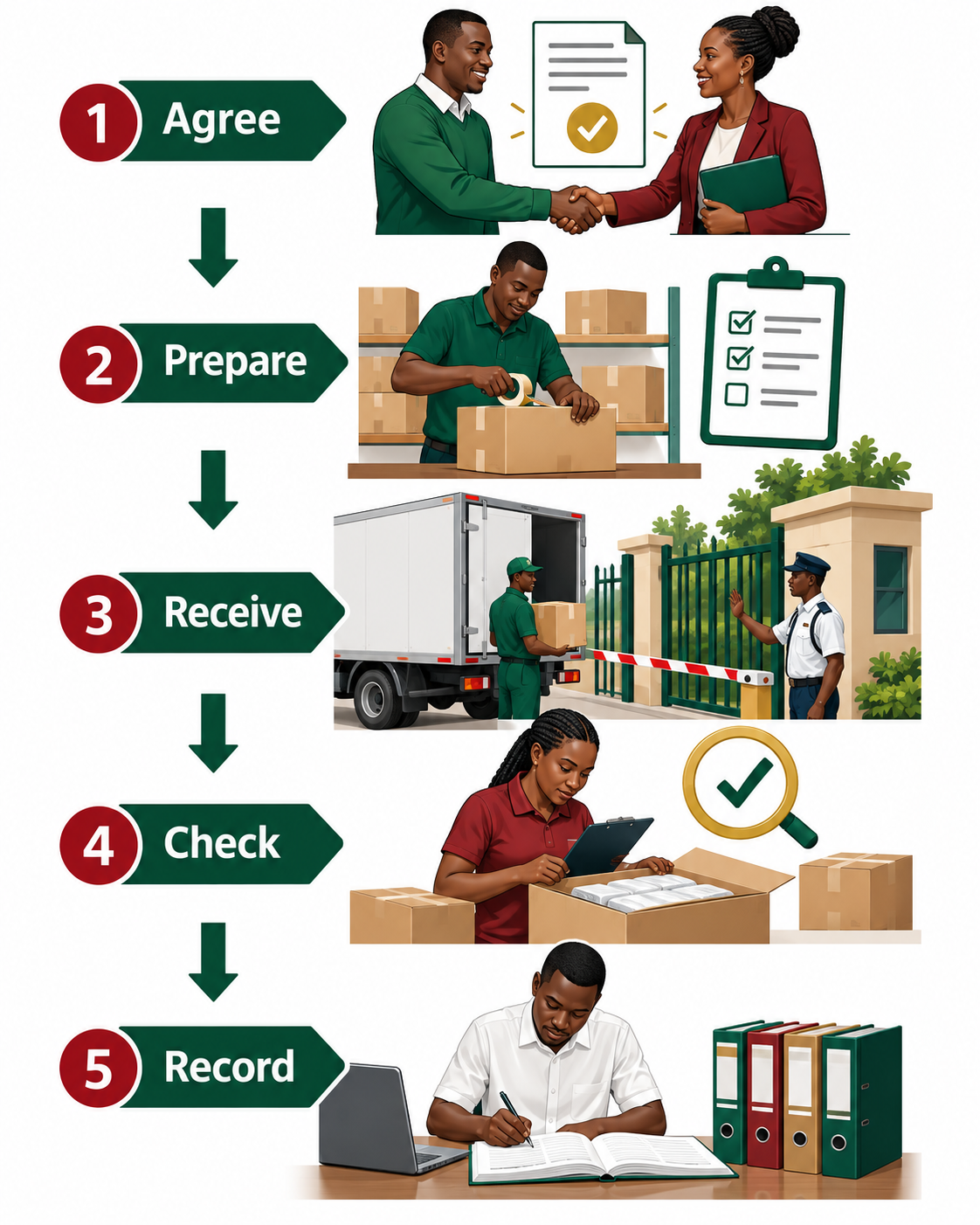
Use this six-step process for your next wholesale enquiry
A good buying routine does not need complicated software. It needs a clear brief, a consistent comparison and a record of decisions. Use the same basic process whether you are ordering shop stock or supplies for several institutional departments.
Assign one person to maintain the order record, even if several colleagues contribute. This helps prevent conflicting instructions reaching the seller. It also makes it easier to identify the latest approved quotation when earlier versions remain in email or messaging threads.
The steps below turn marketplace discovery into a controlled purchase. Adapt them to your organisation's approval requirements, and stop whenever an important specification, payment detail or responsibility remains unresolved.
- Write the buying brief. Describe the intended use, specification, unit of measure, quantity, receiving location and required documents. State which requirements are essential and which alternatives you are willing to consider.
- Shortlist suitable Kenyan-made options. Send the same brief to each relevant seller and ask for a written quotation. Request clarification where product descriptions or packing details do not match your requirement.
- Compare the complete offer. Review minimum quantities, applicable taxes, transport, payment terms and availability together. Note exclusions and unresolved questions instead of comparing only the headline unit price.
- Approve the order and payment arrangement. Confirm the seller, payment recipient and purchasing authority. If escrow is proposed, review the actual provider and release terms before sending funds.
- Prepare for dispatch and receipt. Confirm the receiving contact, access conditions and inspection procedure. Give the receiving team the final order record and a clear route for reporting differences.
- Close and review the purchase. Match the invoice, payment and receiving records. Resolve outstanding issues, record supplier performance and save the accepted specification as a reference for future enquiries.
Start with a clear enquiry, not an uncertain payment
Buying Kenyan-made products through a B2B marketplace is most useful when it makes decisions clearer. A wider shortlist matters, but so does understanding exactly what each supplier offers. The strongest purchase is one your staff can explain, receive and record without relying on guesswork.
For retailers, that means stock suited to customers and workable order quantities. For institutions, it means supplies that meet the intended need and the organisation's approval requirements. In both cases, documentation, payment terms and receiving arrangements belong in the buying decision from the beginning.
Start your next enquiry with the product, quantity, specification and delivery location. Add your documentation requirements and any restrictions on payment or receipt. A complete brief gives sellers a better chance to respond usefully and helps you identify unanswered questions quickly.
If you are unsure where to begin, see how Viwanda works or send a wholesale enquiry. Viwanda focuses on Kenyan-made products and is currently enquiry-led. Online checkout is available only for items stocked by Viwanda; other purchases require confirmation of the specific commercial arrangements.
Bring your next purchasing requirement to Viwanda and ask for the details that matter before committing. Compare clearly, agree in writing and keep the final record. That practical discipline helps turn a promising product discovery into a purchase your business can manage confidently.
“A useful wholesale enquiry should make the product, payment and receiving responsibilities clear before the buyer commits.”— Dr. Chomba Chuma, Founder, Viwanda — editorial view
Frequently asked questions
Can I pay online for every product listed on Viwanda?
No. Viwanda is currently enquiry-led, and online checkout exists only for items stocked by Viwanda. For other products, submit an enquiry and confirm the quotation, seller, payment recipient and fulfilment terms. Do not assume that finding a listing means the goods are immediately available.
Does buying through a B2B marketplace automatically include escrow?
No. Escrow must be explicitly available and supported by clear provider terms. This guide does not claim that Viwanda offers it. If escrow is proposed, verify the provider and review fees, release conditions, inspection deadlines and dispute procedures before paying.
Can a small retailer negotiate a wholesale minimum?
You can ask, but the supplier decides what is workable. Clarify whether the minimum applies per product, carton or overall order. Ask about mixed products, standard stock or a smaller initial purchase, without assuming these options are available or carry the same terms.
What should an institution include in its first enquiry?
Include the specification, quantity, unit of measure, receiving location and required documentation. Explain relevant approval requirements and any restrictions on access, payment or inspection. Request a written quotation showing applicable taxes, transport arrangements and exclusions, then follow your institution's purchasing and authorisation procedures.
Ready to take the next step?
Viwanda makes it straightforward to buy Kenyan-made goods wholesale or reach serious business buyers.
Send your Kenyan-made wholesale buying brief